
Our 7 Day Full Canyon Motorized Rafting Trip: What Makes It So Popular? Our most popular trip BY FAR is our 7 Day Full Canyon...

Why Is Hatch’s 7 Day Full Canyon Motorized Rafting Trip So Popular?
read more
Featured from Blog
Our 7 Day Full Canyon Motorized Rafting Trip: What Makes It So Popular? Our most popular trip BY FAR is our 7 Day Full Canyon...
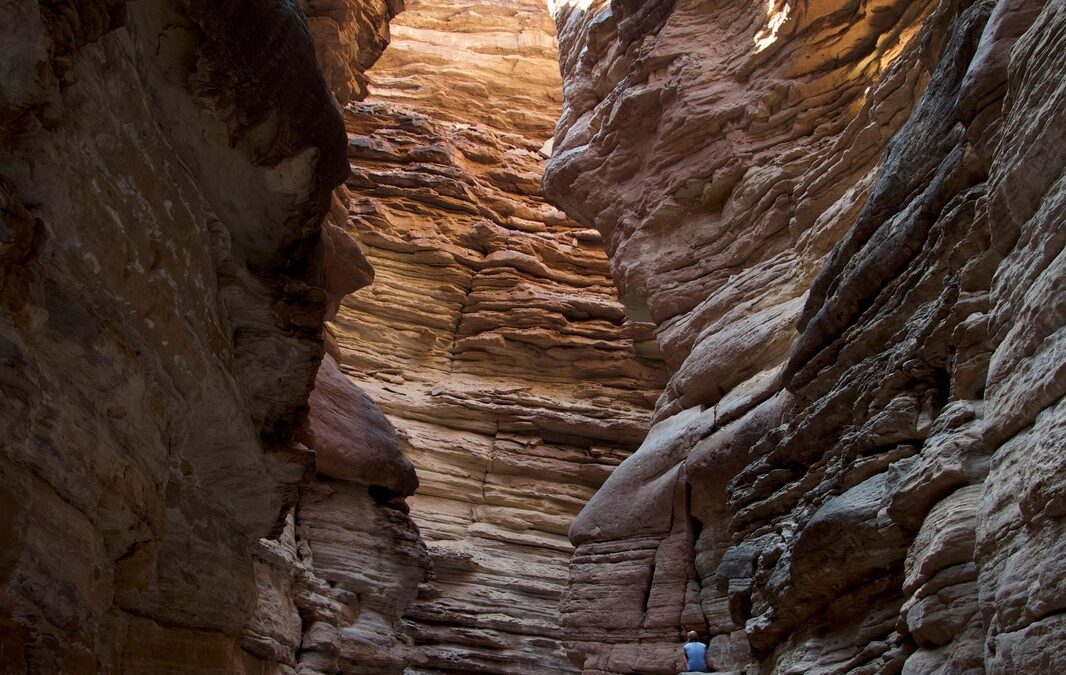
The Grand Canyon is full of incredible places to explore so let’s talk about one: Blacktail Canyon. Sitting at river mile 120 this slot canyon…
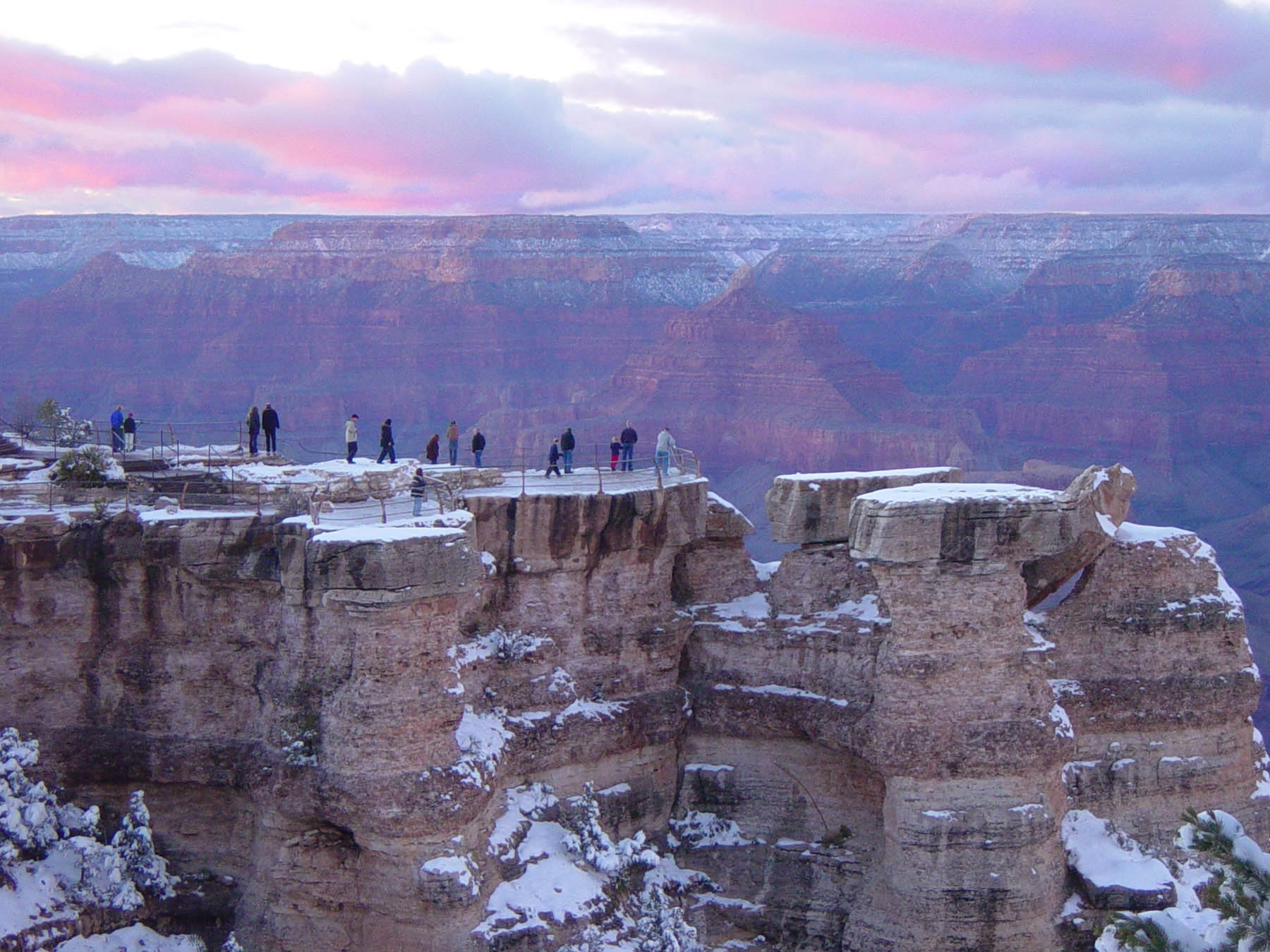
The Grand Canyon is a geologist’s paradise! As you make your way through the canyon you pass through distinct layers of rock. Perfectly displayed records of the history of the world all neatly stacked. Each layer holds its own unique story about what our world once looked like.
Today, I thought we’d take a closer look at one of these layers. Let’s start at the top with the Kaibab Formation!
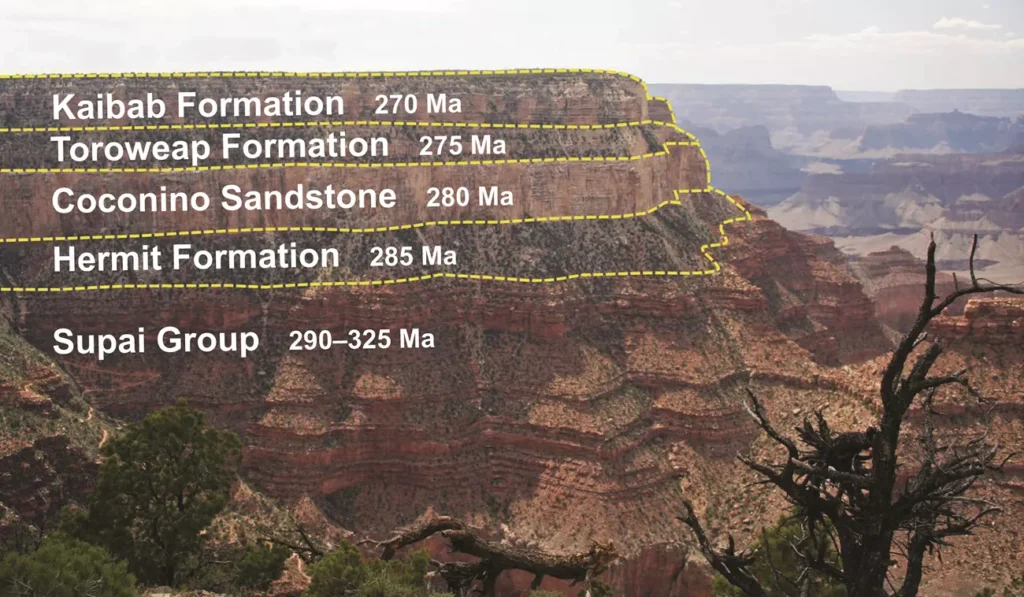
When you start a Grand Canyon river at Lee’s Ferry one of the first layers of rock you’ll notice is the Kaibab Formation. As soon as you hop on the boat and head downstream you’ll see a cream colored rock rising from below at around river mile one or the Paria Riffle. Depending on where you are, this rock layer ranges from 300 to 600 feet thick.
Now that you have an idea of what the rock looks like, let’s explore how it was formed, in other words let’s look at some history!
The Kaibab Formation is around 270 million years old! To put that into perspective, humans have only been around for about 300,000 years. We are really young compared to this rock layer. The world looked entirely different while this rock layer was forming.
Like all rock layers this layer is like a huge time capsule, preserving information about our world’s past. This layer is primarily made of limestone, a type of rock that is created in shallow marine environments. Think of the ocean in the Bahamas, that is one of the best modern comparisons to the environment in which the Kaibab was formed.
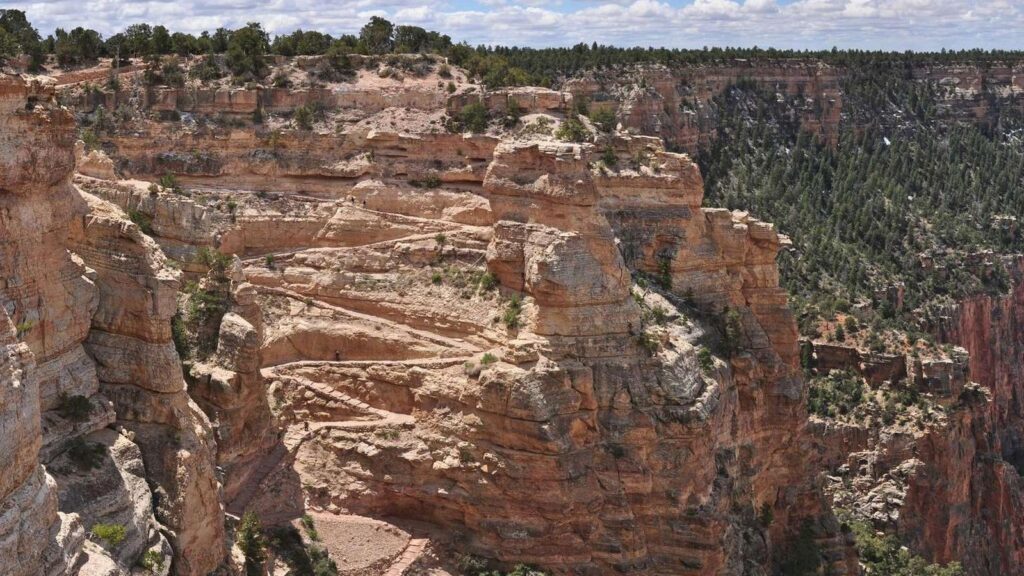
Limestone itself is mainly made up of calcium carbonate, in this case that calcium carbonate comes from the skeletal remains of the plant and animal life that used to inhabit the ocean in the area. Just think how much life was in this sea to be able to create this thick layer of rock. It was a thriving ecosystem booming with all sorts of life! The remains of these plants and animals break down and what’s left builds up creating limestone.
This rock layer even tells us what kinds of plants and animals created it! The Kaibab Formation is filled with all sorts of fossils! Shells, crinoids, and all sorts of other marine life can be found fossilized in this layer.
So as you float down the river after launching from Lee’s Ferry, take a moment to appreciate the Kaibab Formation around you. You’re floating through the remains of an ancient ocean floor and just one of the many chapters of the world’s history that the Grand Canyon has recorded.
Check out this blog to learn more about the Grand Canyons Geology!
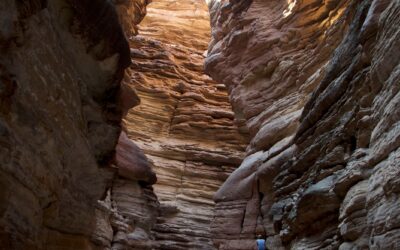
The Grand Canyon is full of incredible places to explore so let’s talk about one: Blacktail Canyon. Sitting at river mile 120 this slot canyon…
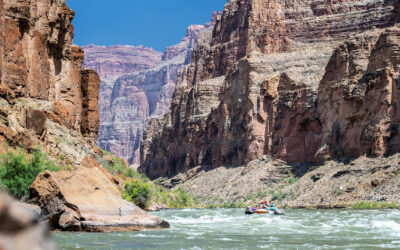
What's the best way to see the Grand Canyon when you want to explore as much as possible? Take a rafting trip through it! If you’ve stood at the rim of the Grand Canyon and you want to see more, we STRONGLY recommend signing up for a rafting trip. You'll...
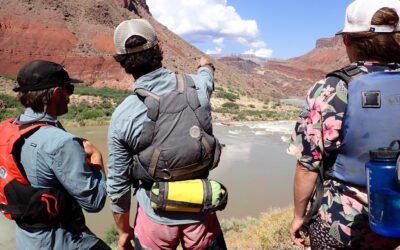
So why is it called Whale Foundation? No, there are no whales in Grand Canyon Whale was the nickname of Curtis Hansen – a legendary river guide in his own right and a friend to all in the river rafting community. A boatman for Hatch starting in the late...